

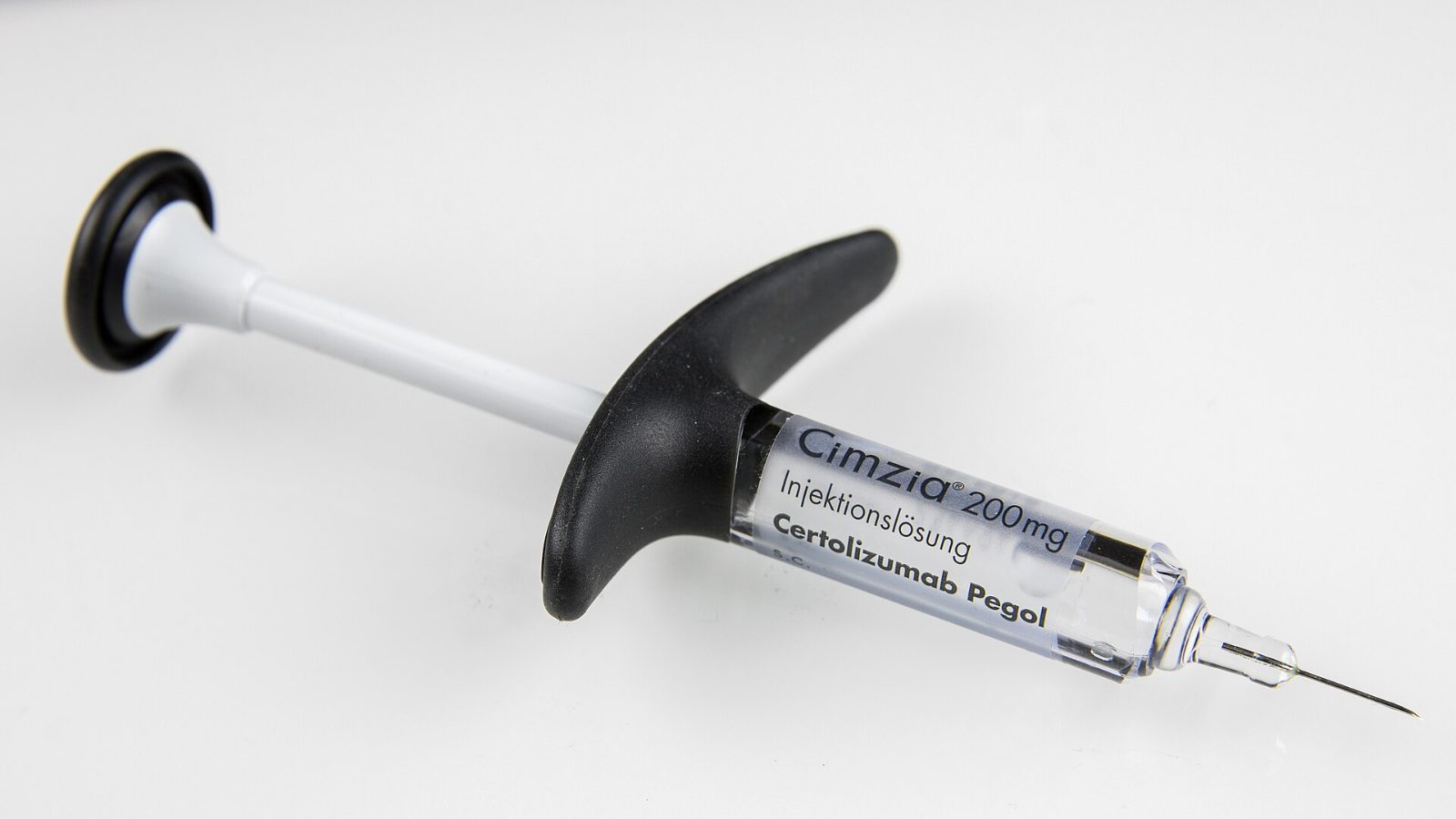
Radiesse is an injectable filler made of tiny calcium hydroxylapatite (CaHA) microspheres suspended in a gel. It adds immediate volume and, over the following months, stimulates the body to produce its own collagen around the microspheres. It is used for deeper folds, cheeks, jawline and the backs of the hands, but unlike hyaluronic acid fillers it cannot be dissolved with an enzyme, so injector experience and careful patient selection are especially important.
How Radiesse works
Calcium hydroxylapatite is a mineral similar to a component of bone and teeth. In Radiesse, smooth microspheres of CaHA are carried in a water-based gel. Once injected:
- Immediately: the gel provides volume and lift
- Over weeks: the gel is gradually absorbed by the body
- Over months: the microspheres act as a scaffold, and the body lays down new collagen around them
- Eventually: the microspheres themselves are broken down and removed naturally
This dual action is why Radiesse is sometimes called a “biostimulatory” filler. It is made by Merz Aesthetics, the company that also makes Xeomin and Belotero.
Approved uses and common applications
In the United States, the FDA approved Radiesse in 2006 for moderate to severe facial wrinkles and folds, such as nasolabial folds, and for restoring facial volume in people with HIV-associated facial fat loss. It later gained approval for correcting volume loss in the back of the hands, and a version with lidocaine was introduced. Other regulators have their own lists of approved indications.
| Area | Typical goal | Notes |
|---|---|---|
| Nasolabial folds and marionette lines | Soften deep folds | One of the original indications |
| Cheeks and mid-face | Restore volume and support | Placed deep, often on the bone |
| Jawline and chin | Definition and structure | Firm product suits structural work |
| Back of the hands | Reduce visible veins and tendons | Product is often diluted for this area |
| Diluted or “hyperdilute” use on face, neck, body | Skin firmness through collagen stimulation | An approach used by some clinicians; protocols vary |
Radiesse vs hyaluronic acid fillers
| Main effect | Volume plus collagen stimulation | Volume and hydration |
|---|---|---|
| Feel | Firm, good for structure | Ranges from soft to firm depending on product |
| Reversible? | No enzyme to dissolve it | Usually dissolvable with hyaluronidase |
| Suitable for lips and under-eyes? | Generally avoided | Specific soft products are used |
| Longevity | Often around a year or more | Varies widely by product and area |
Areas where Radiesse is generally avoided
Most practitioners do not use Radiesse in the lips or the under-eye area. These delicate areas are prone to visible lumps, and because CaHA cannot be dissolved, any problem is harder to correct. If a clinic suggests Radiesse for these areas, ask why.
You can compare filler types side by side in our filler and injectable comparison.
What treatment involves
- Consultation with medical history, examination and photos
- Planning the areas and approximate amount
- Cleansing; numbing cream if needed (many syringes include lidocaine)
- Injection with needle or cannula, often deep in the tissue
- Massage or moulding where appropriate
- Review appointment after a few weeks
Expect swelling, redness, tenderness and possible bruising for several days. Hands may feel stiff and swollen for a little longer.
Because Radiesse cannot be dissolved, the most important decision is made before the needle goes in.
Longevity
Results are commonly reported to last around a year, and in some areas longer, as collagen production continues after the gel is absorbed. Longevity depends on the area treated, the amount used, metabolism and lifestyle factors such as sun exposure and smoking.

Side effects and risks
Common: swelling, bruising, redness, tenderness, itching.
Less common: nodules or lumps, especially if placed too superficially; infection; asymmetry.
Rare but serious: vascular occlusion, where filler affects blood flow, which can lead to skin damage or, very rarely, vision problems. With hyaluronic acid fillers, hyaluronidase is used as an emergency treatment. For CaHA there is no equivalent dissolving agent, although clinicians have protocols to manage complications.
Seek urgent care if you notice
- Severe or worsening pain
- Skin that turns white, mottled, grey or blue
- Blisters or dark patches
- Any change in vision
Aftercare and the first month
Aftercare for Radiesse is similar to other fillers, with a few points specific to collagen stimulators.
- Follow any massage instructions exactly; some practitioners ask patients to massage certain areas for several days, others do not
- Avoid strenuous exercise, saunas, steam rooms and hot environments for a day or two, which is worth planning around in a UAE summer
- Keep hands elevated where possible after hand treatment and avoid heavy lifting for a short time
- Use daily sunscreen, since sun damage breaks down collagen
- Do not judge the final result too early; collagen changes develop over months
Keep a note of the product, area and date. If you later have hyaluronic acid filler or another treatment in the same area, the next practitioner needs to know that CaHA is present.
Who should avoid Radiesse
- Pregnant or breastfeeding women
- People with active infection or inflammation in the area
- Those with a history of severe allergies or allergy to any component, including lidocaine
- People prone to keloid or hypertrophic scarring should discuss this with the practitioner
- Some autoimmune or bleeding disorders need medical clearance
Choosing a practitioner in the UAE
Choose an experienced, licensed doctor or appropriately supervised nurse in a licensed facility. Check licences with the Dubai Health Authority (DHA), the Department of Health Abu Dhabi (DOH) or the Ministry of Health and Prevention (MOHAP). Ask how often they use CaHA, how they manage complications, and to see the sealed product. Our consultation checklist has more questions to ask.
Frequently asked questions
Is Radiesse permanent?
No. It is long-lasting but temporary. The body gradually absorbs both the gel and the microspheres.
Can Radiesse be removed if I do not like it?
It cannot be dissolved with hyaluronidase. Minor issues may settle with time; others need specialist management.
Is Radiesse better than hyaluronic acid filler?
Neither is better overall. Radiesse suits structural areas and collagen stimulation; HA fillers are more versatile and reversible.
How soon will I see results?
Volume is visible immediately. Collagen-related improvement develops over the following months.
Sources: US Food and Drug Administration: Dermal fillers, American Society of Plastic Surgeons, Dubai Health Authority.
Cover photo: Raimond Spekking, CC BY-SA 4.0. Last reviewed: 2026-11-25. General information only, not medical advice. Please consult a licensed practitioner in the UAE about your own situation.