


Neck lines come in two main kinds, and they need different treatments. Horizontal lines, sometimes called “tech neck” or necklace lines, are creases in the skin, influenced by genetics, sun damage, loss of elasticity and repeated bending of the neck. Vertical neck bands are usually caused by the platysma muscle pulling forward. Skin-quality treatments, such as daily sunscreen, retinoids, skin boosters and some energy-based devices, mainly help horizontal lines, while botulinum toxin may soften vertical bands. Significant loose skin is a surgical question.
The neck is thin-skinned and delicate, so gentle, gradual approaches work best.
Two kinds of neck lines
| What you see | Rings or creases across the neck | Cords running down the front of the neck |
|---|---|---|
| Main cause | Skin changes, genetics, sun, repeated bending | Platysma muscle activity and laxity |
| More visible when | At rest, and when looking down | Tensing the neck, grimacing, speaking |
| Treatment focus | Skin quality and hydration | Muscle relaxation, or surgery for laxity |
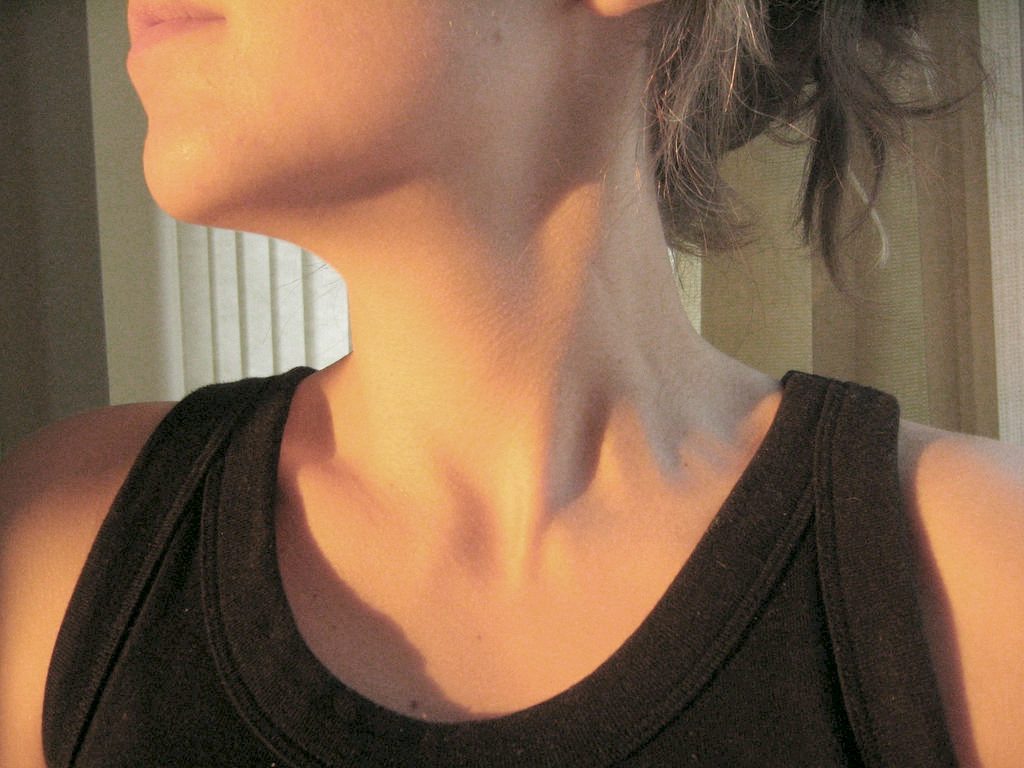
Prevention and skincare
The neck is often left out of sunscreen and skincare routines, which is one reason it can show ageing earlier than the face.
Daily habits for the neck
- Apply broad-spectrum sunscreen to the neck and upper chest every morning, especially in the UAE where UV is high year-round.
- Extend your moisturiser and any retinoid down to the neck, starting with lower frequency because neck skin is more sensitive.
- Hold your phone closer to eye level and take breaks from looking down for long periods.
- Use a pillow height that keeps your neck in a neutral position.
- Avoid smoking, which accelerates skin ageing.
Retinoids can irritate neck skin more easily than facial skin. Our tretinoin vs retinol guide explains how to start slowly.
Clinic treatments for horizontal lines
| Treatment | How it helps | Notes |
|---|---|---|
| Skin boosters (HA) | Improve hydration and fine crepiness | Often a course of sessions; small bumps for a short time |
| Polynucleotides | Support skin quality | Evidence still developing |
| Very soft HA filler in lines | Fills deeper creases directly | Needs a skilled injector; risk of lumps if too superficial |
| Microneedling (with or without radiofrequency) | Stimulates collagen | Several sessions; downtime varies |
| Fractional laser | Resurfacing and collagen stimulation | Choose experienced operators; pigmentation risk in some skin types |
| Diluted biostimulators | Collagen stimulation | Not reversible; experience essential |
Our guides to skin boosters and polynucleotides explain those options in more depth.
Botox for vertical neck bands
Small amounts of botulinum toxin injected into the bands of the platysma muscle can soften their appearance and slightly improve the jawline in some people, an approach sometimes promoted as a “Nefertiti lift”. Results last a few months.
Safety points specific to the neck
- The neck contains muscles involved in swallowing and speaking. Excessive or poorly placed doses can cause neck weakness or difficulty swallowing, which can be serious.
- Choose a practitioner with specific experience in neck treatment, licensed by the DHA, DOH or MOHAP.
- Seek urgent medical help if you have difficulty swallowing, speaking or breathing, or neck weakness after treatment.
Botox is generally avoided during pregnancy and breastfeeding and in people with neuromuscular disorders. Read our botox side effects guide for the full picture.
What results and recovery look like
Neck treatments tend to give gradual, modest improvements rather than dramatic changes, and that is usually the safest way to approach this area.
- Skin boosters: small bumps along the lines are common for a few hours to a day or two, sometimes with bruising. Improvement in crepiness builds over a course of sessions.
- Microneedling and radiofrequency microneedling: redness and sensitivity for a few days are typical; several sessions are often recommended.
- Fractional laser: downtime varies with the device and settings, from a few days of redness to longer peeling. Sun avoidance afterwards is essential.
- Botox for bands: effects appear over about two weeks and wear off over a few months.
Photographs taken in the same light and posture before and after a course are the best way to judge progress, because changes on the neck are easy to miss in the mirror.
Why the UAE climate matters for neck skin
The neck and upper chest are exposed to the sun during driving, walking and outdoor activities, often without the sunscreen people apply to their faces. Heat and humidity can also make heavy creams feel uncomfortable, so people skip them. Choosing a light, non-greasy sunscreen you are happy to wear on the neck every day, and reapplying it when outdoors for long periods, is one of the most effective long-term steps. After laser or resurfacing treatments, many practitioners prefer to schedule neck work in the cooler months, when sun avoidance is easier.
When surgery is the better answer
If the neck has significant loose skin, heavy jowls or marked muscle laxity, non-surgical treatments may give only small improvements. A consultation with a plastic surgeon about a neck lift or related procedures may be more appropriate. An honest practitioner will tell you when injectables are not the right tool.
Building a realistic plan
- Foundation: daily sunscreen and a moisturiser on the neck.
- Active skincare: a retinoid introduced gradually, if tolerated.
- Skin quality treatments: boosters or energy-based devices for horizontal lines.
- Muscle treatment: botox for prominent vertical bands, if suitable.
- Review: reassess after several months; avoid stacking many treatments at once.
Our injectables consultation checklist and treatment comparison table help you discuss options with your practitioner.
Who should be cautious
- People with very sensitive skin, eczema or rosacea on the neck
- Anyone with active infection, rash or broken skin in the area
- People with thyroid conditions or previous neck surgery, who should mention this at consultation
- People with darker skin types considering laser, who should choose operators experienced with their skin type
- Pregnant or breastfeeding women, who should postpone most injectable and laser treatments
FAQ
Can neck lines be removed completely?
Usually they can be softened rather than erased. Deep or long-standing lines tend to improve partially with a combination of treatments.
Is “tech neck” real?
Looking down for long periods repeatedly folds the skin of the neck, which may contribute to horizontal lines alongside genetics and sun damage.
How long does neck botox last?
Typically a few months, similar to other areas, but it varies between people.
Do neck creams work?
Moisturisers can improve hydration and the look of fine lines. Products with retinoids and daily sunscreen have the best evidence. Creams will not tighten loose skin.
Sources: American Academy of Dermatology, British Association of Dermatologists, Dubai Health Authority
Cover photo: Fiorenzo Fiorenza, CC BY-SA 4.0. Last reviewed: 2026-11-25. General information only, not medical advice. Please consult a licensed practitioner in the UAE about your own situation.