

Masseter Botox is an injection of botulinum toxin into the large chewing muscles at the angle of the jaw. It is used for two main reasons: to reduce clenching and grinding (bruxism), and to slim a square or wide lower face caused by enlarged masseter muscles. Relief from clenching often starts within a couple of weeks, while visible slimming develops gradually over one to two months.
The masseter muscle
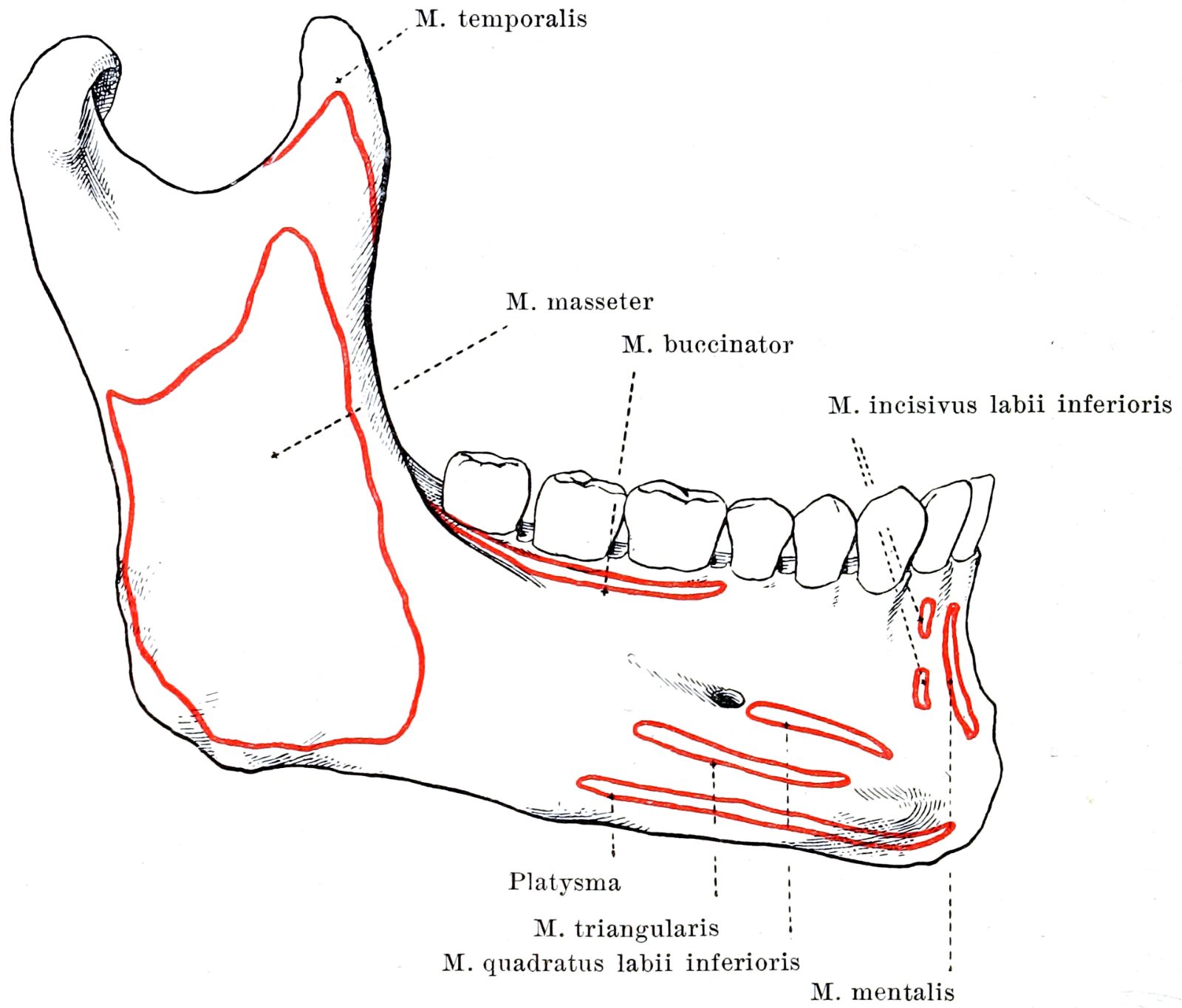
The masseter runs from the cheekbone down to the angle of the lower jaw. It is one of the strongest muscles in the body for its size and does most of the work of chewing. In people who clench their teeth, grind at night, or chew gum heavily, it can become bulky, much like any muscle that is exercised a lot. This is called masseter hypertrophy, and it can make the lower face look wider or more square.
You can feel your own masseter by placing your fingertips just in front of your ear lobes and clenching your teeth. The muscle bulges under your fingers.
Two reasons people choose it
| Goal | How it helps | When you notice it |
|---|---|---|
| Clenching and grinding | Weakens the force of contraction, easing strain on teeth and jaw | Often within 1 to 2 weeks |
| Facial slimming | Muscle reduces in size when used less, softening a square jaw | Gradually over 4 to 8 weeks or more |
| Tension headaches linked to clenching | May reduce muscle tension in some people | Varies |
Many people experience both benefits together. For slimming, results often look best after a second or third treatment, as the muscle shrinks further with repeated relaxation.
Masseter Botox at a glance
- Area: both sides of the lower jaw, behind the cheek
- Procedure time: about 10 to 15 minutes
- Typical duration: around 3 to 6 months; may lengthen with repeated sessions
- Downtime: minimal; mild tenderness or chewing fatigue for a few days
- Note: cosmetic jaw slimming is an off-label use in many countries
Bruxism needs a wider look
Teeth grinding and clenching can be linked to stress, sleep disorders such as sleep apnoea, bite problems, certain medicines and caffeine or alcohol. Botox treats the muscle, not the cause. Before treatment for bruxism, it makes sense to see a dentist, who can check for tooth wear, fit a night guard if needed, and look for problems with the jaw joint (TMJ). In the UAE, many dental clinics and dermatology clinics work together on this.
If you have jaw locking, clicking with pain, limited mouth opening or ear pain, a dentist or maxillofacial specialist should assess you, because these can have causes that Botox will not fix.
For clenching, Botox is a tool, not a diagnosis. Combining it with a dental check and a night guard gives the clearest picture.
Is it right for your face shape?
A wide lower face is not always caused by muscle. The jaw bone, fat in the lower cheeks, and jowling with age all contribute. A good practitioner will feel the muscle as you clench and look at your face at rest and in profile.
Usually good candidates: younger or middle-aged people with clearly bulky masseters, especially if they clench.
Possibly not suitable: people whose width comes mainly from bone structure, and older people with loose skin, in whom reducing muscle bulk can sometimes make jowls or hollowing more noticeable.
For comparison with fillers and other options for jawline shaping, see our dermal filler and injectable comparison.
Side effects and risks
Most people have only mild effects:
- small bruises or tenderness at injection sites
- tired feeling when chewing tough food for a couple of weeks
- mild headache
Less commonly:
- an uneven or altered smile if toxin spreads to nearby smile muscles
- a “paradoxical bulge,” where a part of the muscle not treated becomes more visible
- hollowing or sagging in the cheeks with repeated high doses
Seek urgent medical help if you notice
Difficulty swallowing, speaking or breathing, double vision, drooping eyelids or new widespread muscle weakness after treatment. These are rare but serious.
Who should avoid masseter Botox
- People who are pregnant or breastfeeding
- People with neuromuscular disorders such as myasthenia gravis
- Anyone with infection or inflammation at the injection sites
- Those allergic to botulinum toxin products
- People taking medicines that interact with botulinum toxin, including some antibiotics; tell your doctor everything you take
Choosing a practitioner in the UAE
Masseter injections require anatomical knowledge: the toxin must go into the right part of the muscle, avoiding the parotid gland and nearby smile muscles. Choose a licensed doctor in a facility licensed by the Dubai Health Authority, the Department of Health in Abu Dhabi, or the Ministry of Health and Prevention. Ask how many masseter treatments they perform and which product and dose they plan to use. The injectables consultation checklist covers the key questions.
After treatment
- Avoid massaging or pressing on the jaw for the rest of the day
- Skip intense exercise, saunas and facials for about 24 hours
- Choose softer foods if chewing feels tired
- Book a review at around two to four weeks if your clinic offers one
Frequently asked questions
How long does masseter Botox last?
Usually around three to six months. Some people find results last longer after several treatments, as the muscle becomes less bulky.
Will masseter Botox change my smile?
It should not if injected correctly. Rarely, product affects nearby smile muscles and causes temporary asymmetry, which wears off.
Does masseter Botox hurt?
Most people feel a few quick pinches and pressure. The muscle can feel tender for a day or two.
How many units are needed?
Doses vary by product, muscle size and goal. Your doctor will decide based on an examination. Ask what dose is planned and why.
Sources: American Academy of Dermatology, American Dental Association, Dubai Health Authority
Cover photo: Birmingham Museums Trust, Angie Bolton, 2013-06-12 20:57:32, CC BY-SA 4.0. Last reviewed: 2026-11-25. General information only, not medical advice. Please consult a licensed practitioner in the UAE about your own situation.



